

IEC Code Registration Online – Get Your Import Export Code
IEC Code (Importer Exporter Code) is the DGFT-issued identification number Indian businesses use for eligible import and export activity. Get clear guidance on IEC eligibility, documents, DGFT application steps and the current government fee for your import-export requirements.

- Online Application Assistance
- Document Guidance
- DGFT Process Guidance
- Application Support
- Status Assistance
- Secure Process
What is IEC Code?
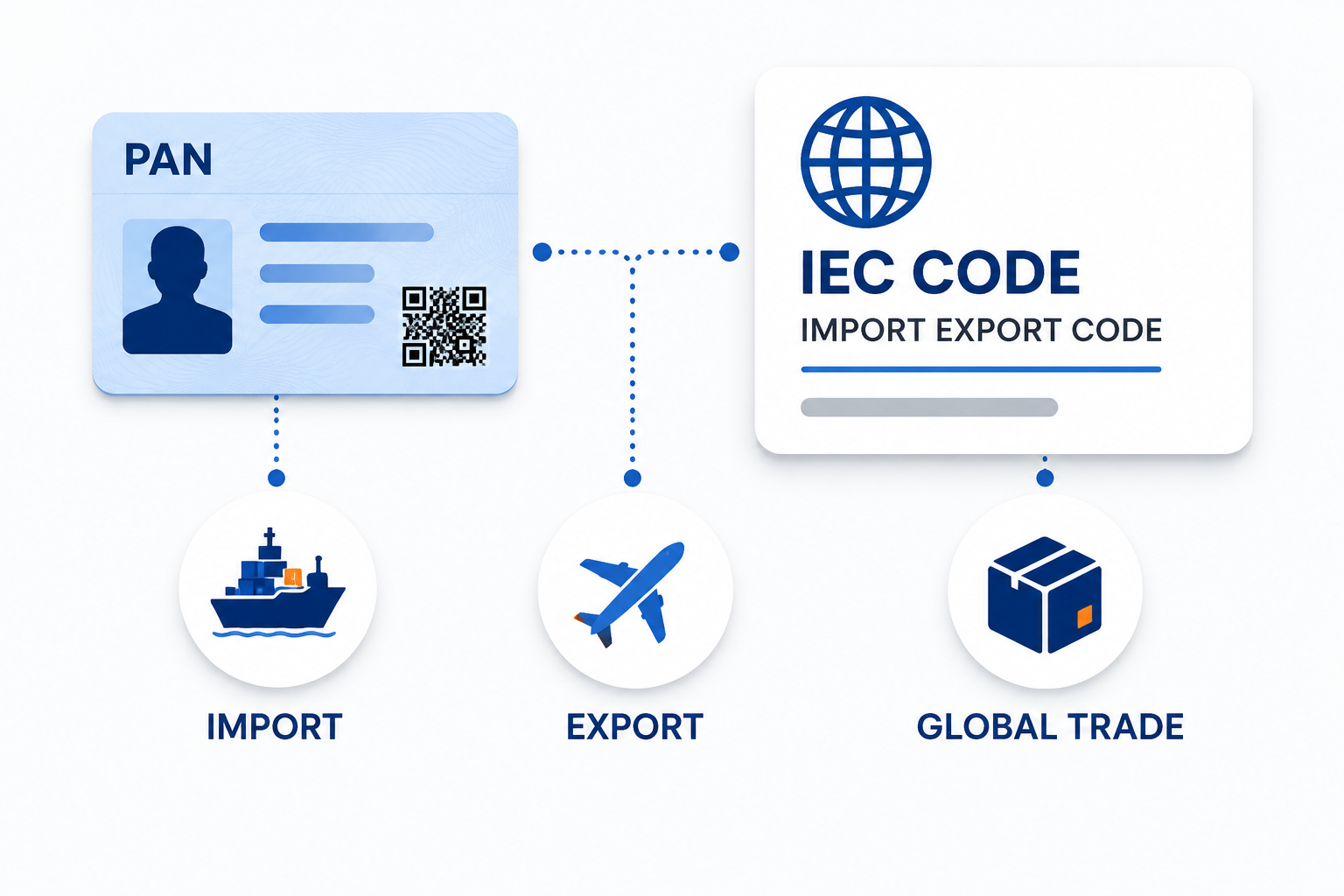
IEC Code (Importer Exporter Code) is a 10-digit identification number issued by the Directorate General of Foreign Trade (DGFT) to Indian businesses and individuals, linked to their PAN. It is generally required to carry out eligible import and export activity in India, and is used by customs authorities and banks to identify the importer or exporter in a transaction.
IEC at a glance
Understand IEC Code in one view
Before diving into documents and process, here's the core profile of an IEC Code — what it is, who issues it and how it's used in day-to-day trade.
Official DGFT process vs IEC-Code.org assistance
It's important to know exactly who does what. Here's a clear split between the government process and the assistance we offer.
Official Government Process — DGFT
- Operates the official IEC application system
- Handles government processing of every application
- Issues the IEC and maintains official records
- Sets and collects government fees
- Publishes official rules, exemptions and requirements
IEC-Code.org Assistance
- Helps you understand eligibility & requirements
- Provides document guidance before you file
- Offers application assistance and process guidance
- Gives status guidance while DGFT processes your case
- Supports modification/update guidance after issuance
Can I apply for IEC Code myself?
Yes. Here's an honest look at both paths so you can choose what fits you.
Applying yourself. Applicants can apply directly through the official DGFT portal. It's a fully online process, and DGFT's own guidance walks you through each field.
Getting assistance. Professional assistance is entirely optional. It can help with understanding requirements, preparing accurate information and navigating the application steps — particularly useful if this is your first application or your entity structure is more complex.
Either way, the government fee is paid directly to DGFT, and DGFT is the only authority that issues the IEC.
Apply Yourself
Go directly to the official DGFT portal and file your own application.
Apply on Official DGFT →What does IEC Code mean, and why does it exist?
A closer look at what the code represents, who issues it, and how it fits alongside other registrations your business may already hold.
Full form and meaning. IEC stands for Importer Exporter Code — a unique 10-digit number that identifies a business or individual as a recognised participant in India's foreign trade.
Issuing authority. The Directorate General of Foreign Trade (DGFT), which functions under India's Ministry of Commerce and Industry, is the sole authority that issues, modifies and deactivates IEC codes.
Role in international trade. Customs authorities require a valid IEC to clear import or export shipments, and banks typically ask for it when processing foreign exchange payments tied to trade transactions.
Relationship with PAN. Since a policy change some years ago, the IEC is directly linked to the applicant's PAN — in practice, one PAN is associated with one IEC.
IEC vs a licence. IEC is an identification number, not a licence or permit to trade in any specific product. Certain restricted or regulated goods may still need additional licences or approvals from the relevant authority.
IEC vs GST. GST is an indirect tax registration used for domestic and export taxation, while IEC is a trade identification number used specifically for cross-border shipment and banking purposes. The two serve different functions and neither replaces the other.
Exemptions. DGFT specifies certain categories of traders, and certain types of goods or transactions, that are exempt from mandatory IEC registration. These exemptions are periodically reviewed, so it's worth confirming current applicability before assuming one applies to your situation.
IEC Code in 60 seconds
A simplified view of how a business moves from planning to using an IEC in practice.
Plan international trade
Your business decides to import or export goods or services as part of its operations.
Check IEC applicability
Confirm whether your entity type and activity require an IEC, or fall under a specific exemption.
Submit application via DGFT
File the application online with PAN, business and bank details, and required documents.
Use IEC for trade
Once issued, use the IEC for eligible import/export shipments, customs clearance and bank transactions.
Who needs an IEC Code?
Most entities engaged in cross-border trade need an IEC. Here's how applicability typically breaks down by structure.
Proprietorship
Sole proprietors trading in their own name apply using their individual/business PAN.
Learn more →Partnership Firm
Registered partnership firms apply using the firm's PAN and partner details.
Learn more →LLP
Limited Liability Partnerships apply with the LLP's PAN and designated partner details.
Learn more →Private Limited Company
Companies apply using the company PAN, incorporation certificate and authorised signatory details.
Learn more →Public Limited Company
Listed and unlisted public companies follow a similar route to private companies, with company PAN and board-authorised details.
Learn more →Individual
An individual can apply as a proprietor using their own PAN, identity and address proof.
Learn more →Trust / Society
Certain trusts and societies engaged in eligible trade activity can apply where applicable under current rules.
Learn more →MSMEs & Other Entities
Registered MSMEs and other eligible entity types can generally apply following the same core process.
Learn more →Do I need an IEC Code?
Answer two quick questions for general guidance on whether IEC may apply to you.
What are you planning to do?
Are you covered by a specific IEC exemption?
Our general guidance
IEC may be applicable to your business. Check the current DGFT requirements or speak with our team for guidance specific to your situation.
This tool is for general guidance only and is not a legal determination of IEC applicability.
IEC Code eligibility
A general view of who can apply. Requirements can be refined by entity type, so treat this as a starting checklist.
IEC document checklist
Not every entity needs identical documents — this is a general checklist; your exact list depends on your entity type.
PAN
Permanent Account Number of the individual or business entity.
All entity typesIdentity Proof
Proof of identity of the applicant or authorised signatory, as applicable.
Individuals & signatoriesAddress Proof
Proof of business address or registered office, depending on entity type.
All entity typesBank Details
Bank account details, generally verified through a cancelled cheque or bank certificate.
All entity typesBusiness/Entity Documents
Partnership deed, LLP agreement or Certificate of Incorporation, as applicable to your structure.
Firms, LLPs, companiesAuthorised Signatory Details
Details of the person authorised to sign and submit the application on behalf of the entity.
Firms, LLPs, companies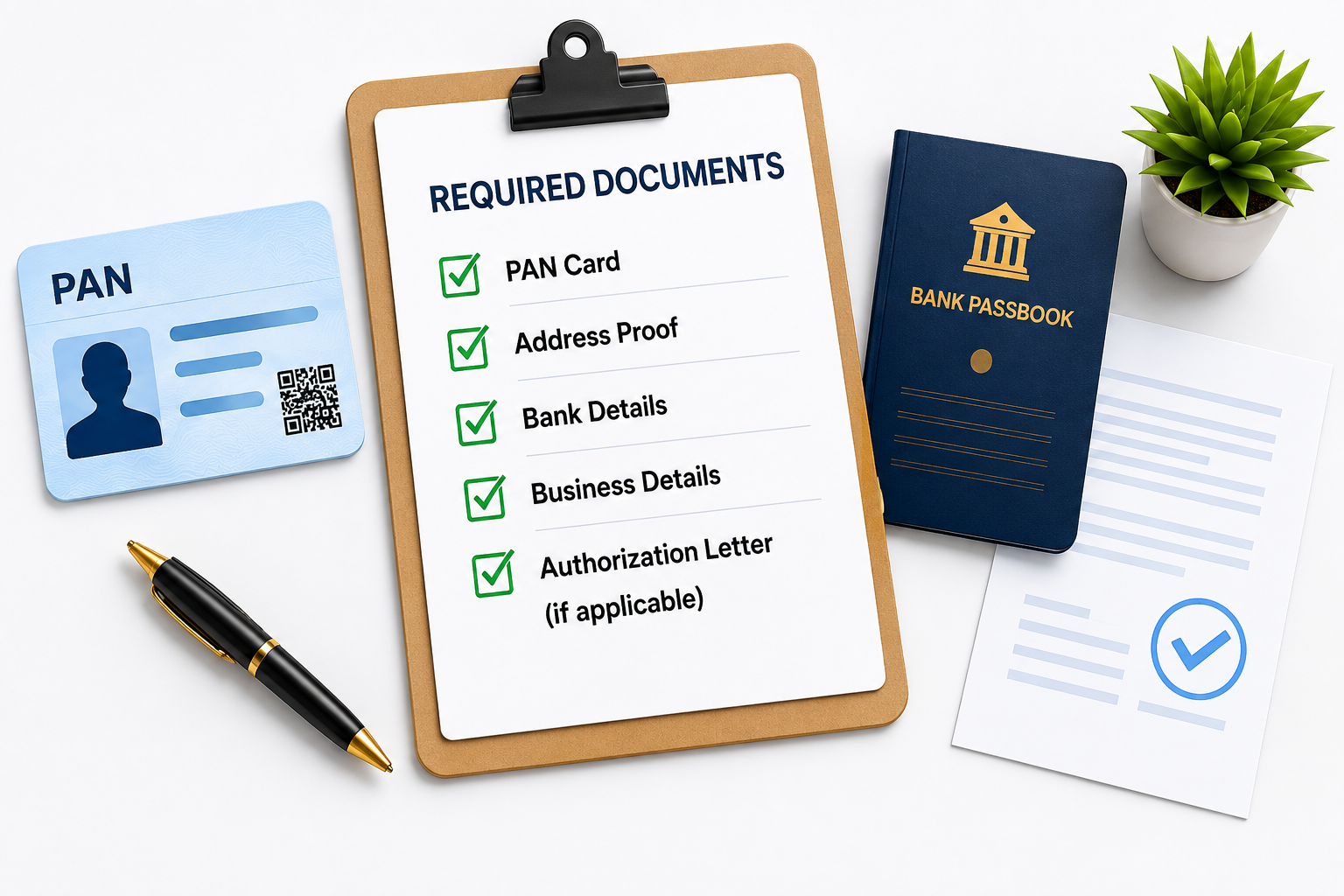
Before you submit your IEC application
IEC Code registration process
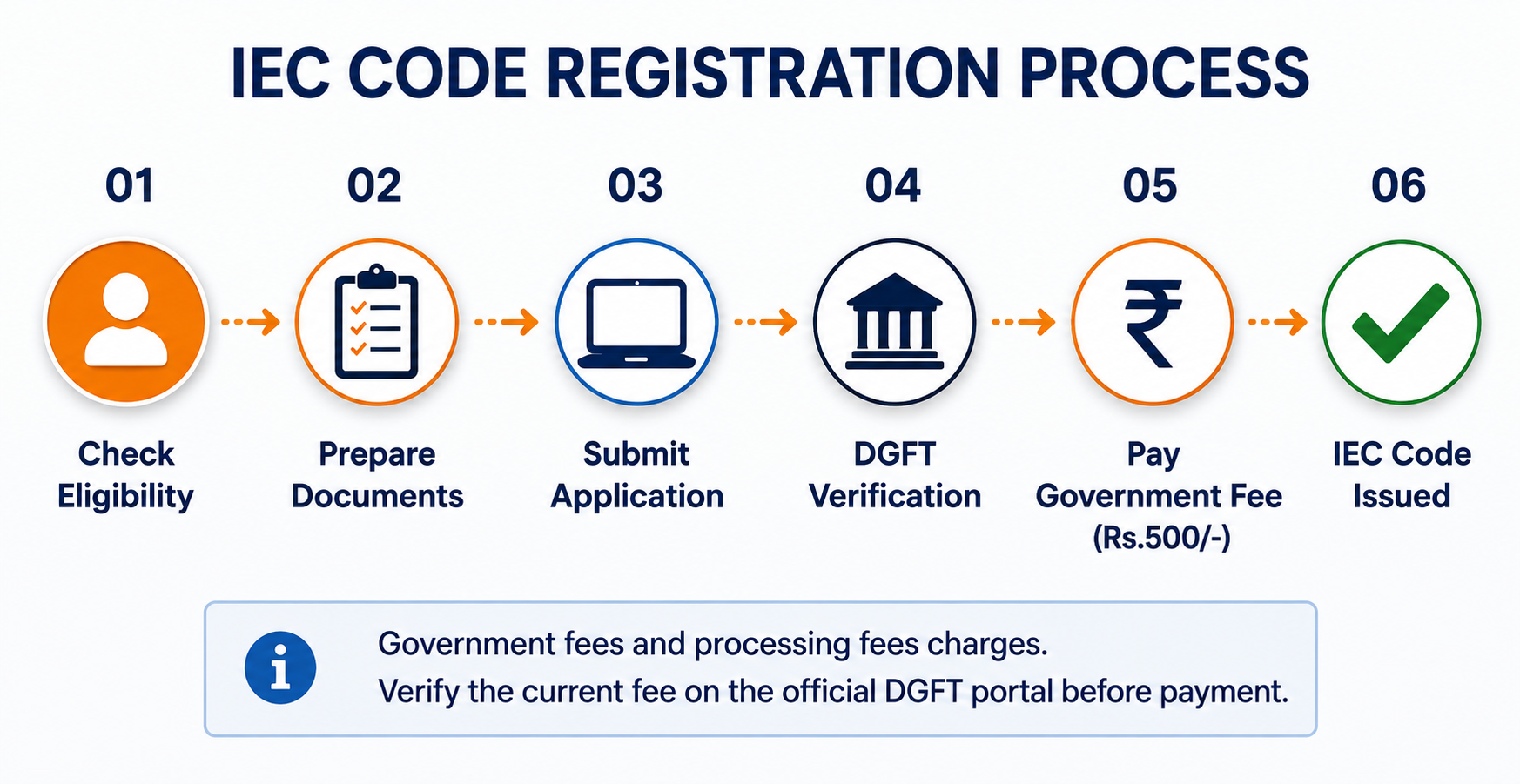
A typical online IEC application follows six stages, from checking applicability to receiving your code.
Check applicability
Confirm whether your business needs an IEC or falls under an exemption.
Prepare documents
Gather PAN, identity, address, bank and entity documents.
Complete application
Fill in applicant, business and bank details on the DGFT portal.
Verify / sign
Authenticate the application using the applicable e-signature method.
Pay government fee
Pay the applicable DGFT application fee online.
Track & receive IEC
Track status from your dashboard and receive your IEC once approved.
IEC Code fees
Keep the government fee and any professional assistance charge separate — they are two different things.
Paid directly to DGFT during online application. Verify the current fee on the official DGFT portal before paying.
Optional service charge for document review and application support. Contact us for current pricing.
Official Resources
Use the official DGFT portal for authoritative government rules, applications and updates. IEC-Code.org is an independent assistance service and is not affiliated with the Government of India or DGFT.
How to apply for IEC Code online
A comprehensive walkthrough of the online application. Menu names may change as the DGFT portal is updated, so treat this as a general guide rather than an exact click-path.
- Create/access your DGFT account — register or log in on the official DGFT portal.
- Start the IEC application — select the relevant application type from your dashboard.
- Enter applicant details — name, PAN and contact information.
- Enter PAN details — the portal typically validates PAN details automatically.
- Enter business details — entity type, nature of business and constitution documents.
- Enter address details — registered/business address with supporting proof.
- Enter bank information — account details for verification.
- Upload documents — clear scans of every required document.
- Authenticate/sign — complete the applicable e-signature or authentication step.
- Pay the application fee — complete payment through the portal's online payment options.
- Submit the application — review all details before final submission.
- Track status — monitor progress from your DGFT dashboard until the IEC is issued.
IEC Code for different business types
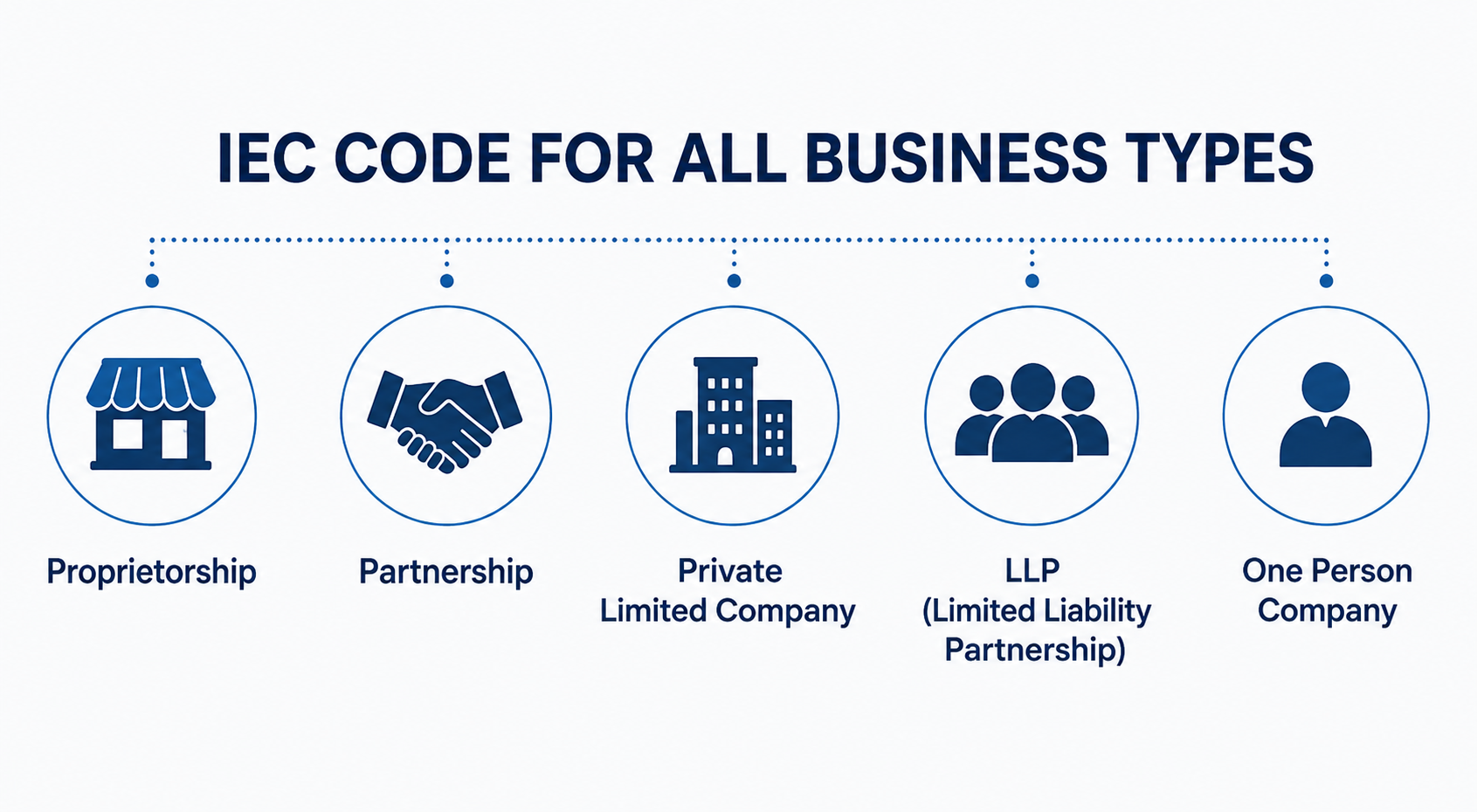
Core requirements stay similar across entity types, with a few differences worth knowing.
IEC Code for Proprietorship
A proprietor applies in their own name using their individual PAN. Common documents include identity proof, address proof and bank details.
IEC Code for Partnership Firm
The firm applies using its own PAN, along with the partnership deed and details of the authorised partner.
IEC Code for LLP
LLPs apply using the LLP's PAN, LLP agreement and designated partner details.
IEC Code for Private Limited Company
Companies apply using the company PAN, Certificate of Incorporation and authorised signatory details.
IEC Code for Public Limited Company
Similar process to private companies, with company PAN and board-authorised signatory documentation.
IEC Code for Individual
Individuals can apply using their own PAN, identity proof and address proof, similar to a proprietorship.
IEC Code for MSME / Registered Businesses
MSME-registered businesses follow the same core process as their underlying entity type (proprietorship, partnership, LLP or company), with Udyam registration as supplementary documentation where relevant.
Import vs export — how IEC applies
The IEC itself is the same code either way, but how it's used differs depending on trade direction.
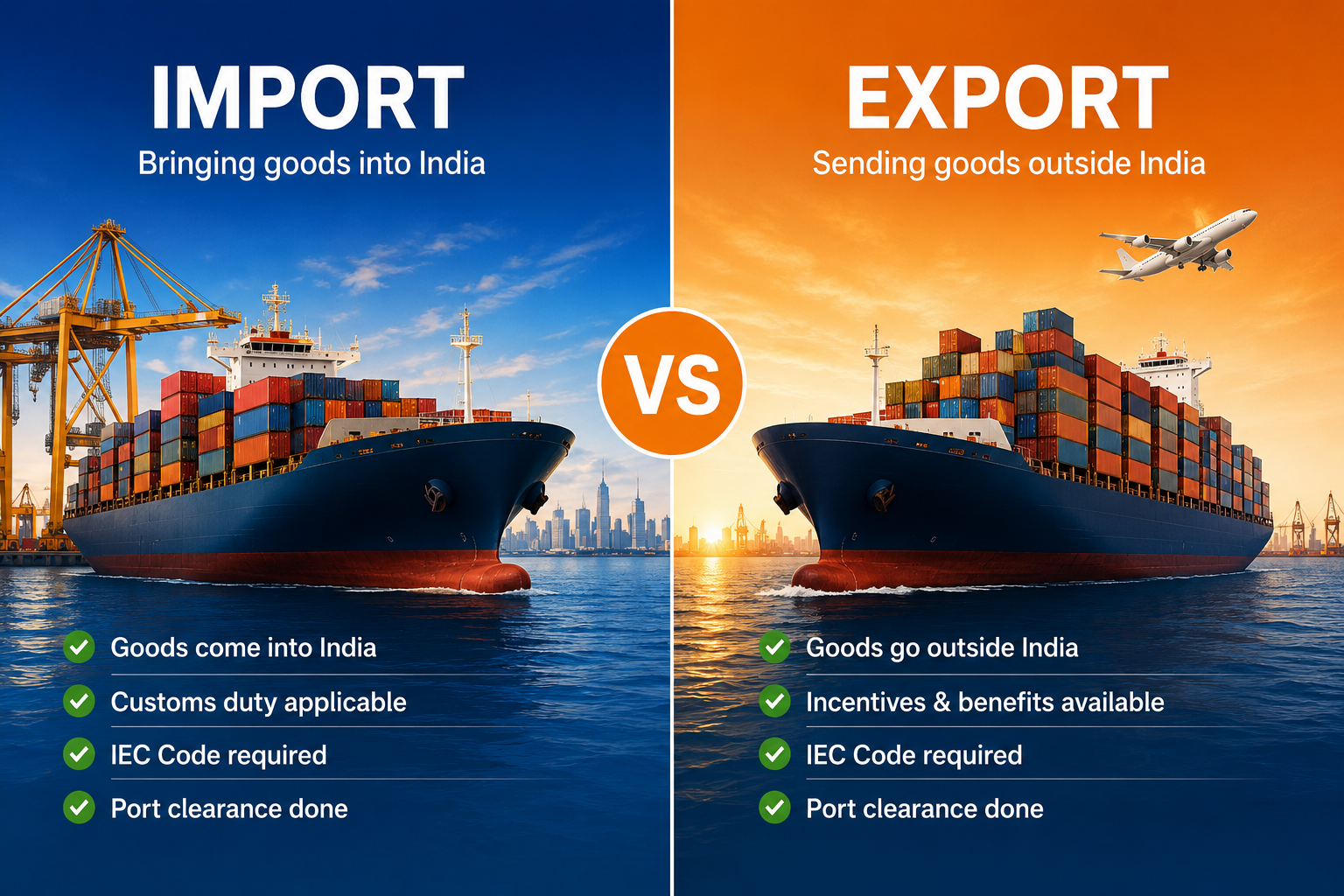
Import
- Typical use case: bringing goods, raw materials or equipment into India.
- IEC applicability: generally required to clear import shipments through customs.
- Documentation: IEC is quoted on the Bill of Entry and related customs paperwork.
- Relevance: banks may reference the IEC for import-related foreign exchange remittances.
Export
- Typical use case: shipping goods or services from India to overseas buyers.
- IEC applicability: generally required to file the Shipping Bill and clear export shipments.
- Documentation: IEC is referenced across export documentation and bank realisation of export proceeds.
- Relevance: certain export incentive schemes may also require a valid IEC.
IEC vs GST vs Udyam/MSME
Three different registrations that often get confused — here's how they differ.
| IEC | GST | Udyam / MSME | |
|---|---|---|---|
| Purpose | Identification for import/export trade | Indirect tax registration | Recognition as a micro, small or medium enterprise |
| Issuing Authority | DGFT | GST Network / Tax Department | Ministry of MSME (Udyam portal) |
| Main Use | Customs clearance, trade banking | Tax invoicing, input credit, compliance | MSME benefits, subsidies, priority lending |
| Relation to International Trade | Directly required for cross-border shipments | Relevant for export documentation & refunds | Indirect — may support certain export schemes |
IEC Code vs IEC Number vs IEC Certificate
These three terms are commonly used interchangeably in everyday conversation. Here's what each one actually refers to.
In practice, all three point to the same underlying registration with DGFT — there isn't a meaningful legal distinction between them, just different ways people refer to the code, the number and its supporting document.
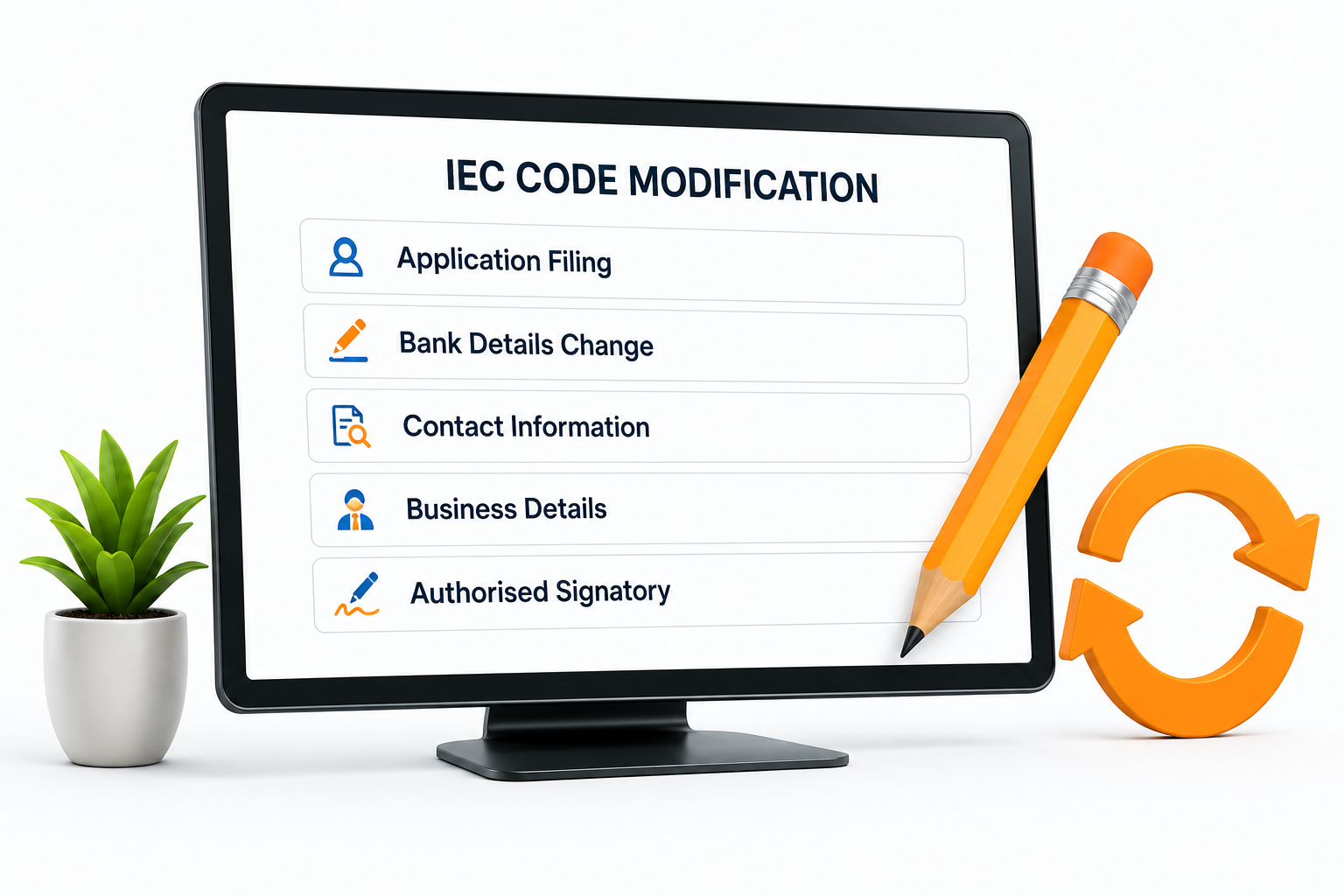
IEC modification & update
Your IEC details should stay current. Here's what's commonly updated and why it matters. This is different from the annual updation requirement covered next — modification is for a specific change; annual updation is a periodic confirmation.
IEC annual update / annual updation
Separate from making a specific modification, DGFT requires periodic confirmation of your IEC details to keep the code active.
What it is. IEC details may need periodic confirmation/updation according to current DGFT requirements, even if nothing about your business has actually changed. This annual updation is a confirmation step, not a correction step.
How it's different from modification. A modification is filed when a specific detail changes — address, bank, contact or authorised person. Annual updation is a recurring confirmation DGFT expects on its own schedule, independent of whether any detail changed.
Consequences of missing it. Users should verify the current DGFT requirements and applicable timelines; missing a required update can have consequences under current rules, including the IEC being flagged or deactivated until updated.
On fees. DGFT generally distinguishes between updation within the normal stipulated annual update period and a late update, which can carry an applicable fee. Applicable fees and timelines can change — check the current DGFT notification/fee schedule before updating rather than relying on a fixed number here.
IEC status & verification
Both application status and an issued IEC can be checked directly through DGFT's official facilities.
Application status. After submission, you can track your IEC application's progress from your DGFT account dashboard.
Verifying an issued IEC. DGFT provides an official facility to verify details of an issued IEC.
Where to check. Always use the official DGFT portal for status tracking and verification — this ensures you're seeing accurate, current information.
Check on Official DGFT Portal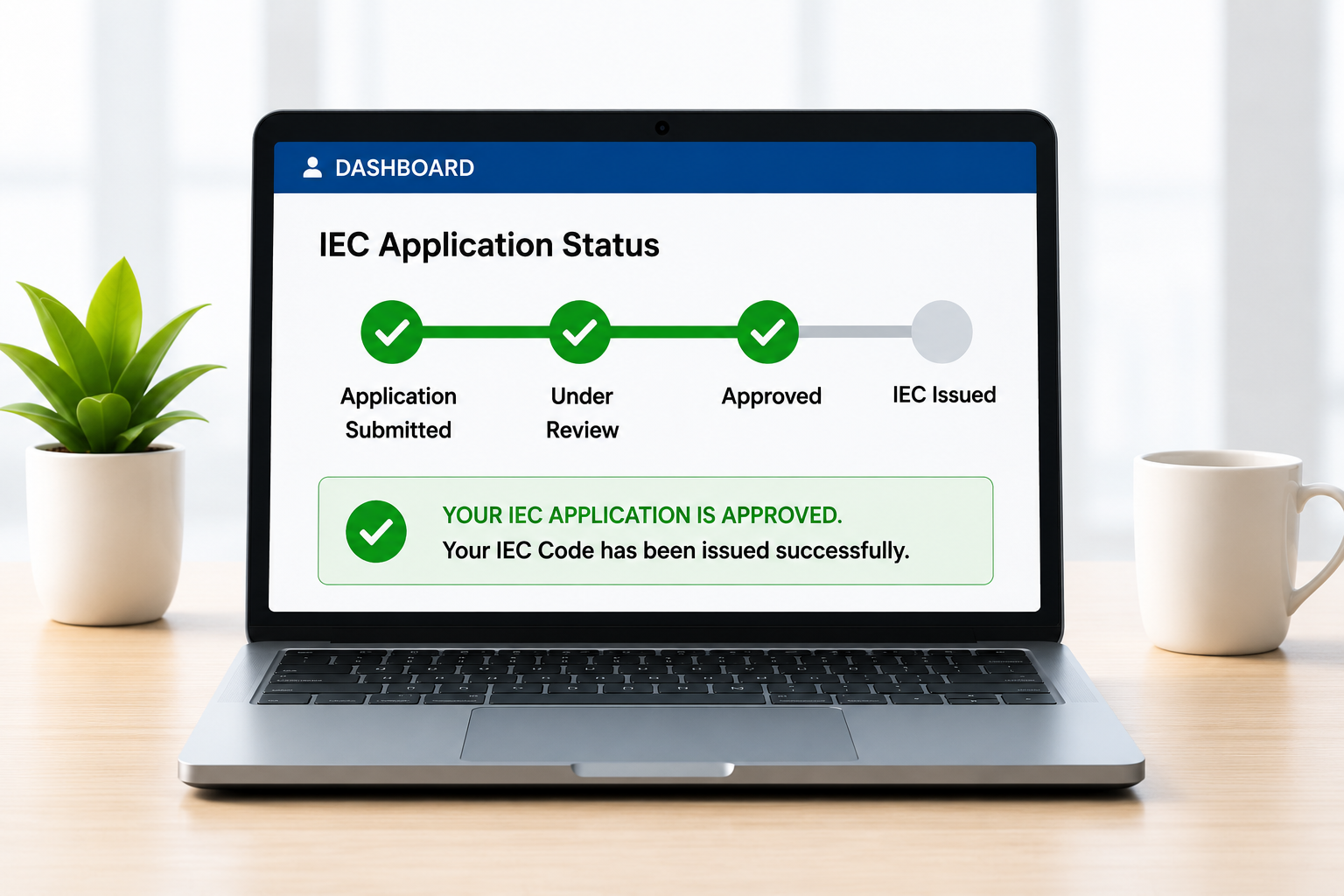
Common IEC application problems
If your application has hit a snag, here are common causes and the recommended next step.
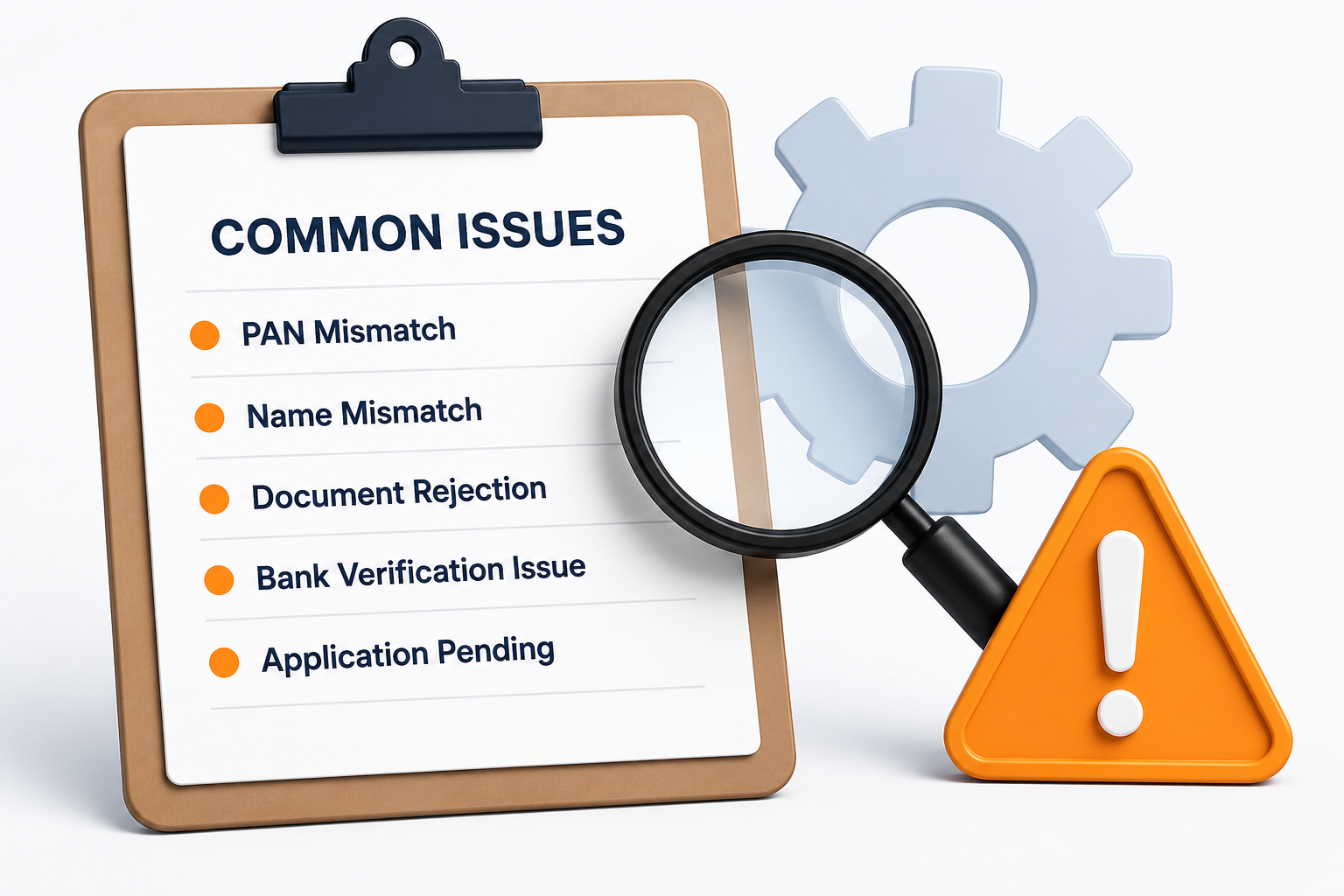
PAN mismatch
- Possible reason
- PAN details entered don't match official PAN records.
- Recommended step
- Re-verify PAN spelling, DOB/incorporation date and name against your PAN card before resubmitting.
Name mismatch
- Possible reason
- Applicant or entity name differs across documents.
- Recommended step
- Ensure the exact same legal name appears on every uploaded document.
Bank verification problem
- Possible reason
- Bank account details couldn't be validated, or the account isn't in the applicant's name.
- Recommended step
- Double-check account number, IFSC and account holder name; use a cancelled cheque or bank certificate.
Document issue
- Possible reason
- Unclear scans, wrong file format, or missing pages.
- Recommended step
- Re-upload clear, complete, correctly formatted documents.
Application query raised
- Possible reason
- DGFT has requested clarification or additional information.
- Recommended step
- Respond promptly through your DGFT dashboard with the requested details.
Application pending
- Possible reason
- Normal processing time, or an unresolved query.
- Recommended step
- Check your dashboard for pending queries; if none, allow standard processing time before following up.
Incorrect details after issue
- Possible reason
- A typo or outdated detail was submitted and approved.
- Recommended step
- File a modification request on the DGFT portal to correct it.
Modification issue
- Possible reason
- Supporting documents for the change weren't sufficient.
- Recommended step
- Re-check the document requirements for that specific type of modification and resubmit.
Before you apply — checklist
Run through this before you start your application to avoid the most common delays.
10 common IEC Code application mistakes
Small errors are the most common reason applications get delayed or queried.
Mismatched PAN details
Even a small spelling difference between PAN records and the application can trigger a rejection or query.
Inconsistent entity name
Using different name formats across documents creates verification problems.
Incorrect bank details
A wrong account number or IFSC delays bank verification significantly.
Blurry or incomplete document scans
Illegible uploads are one of the most frequent causes of application queries.
Wrong entity type selected
Selecting the wrong constitution type leads to mismatched document requirements.
Outdated address information
An address that doesn't match current proof can cause delays at the verification stage.
Missing authorised signatory details
Companies and LLPs often miss updating who is authorised to sign the application.
Ignoring a DGFT query
Not responding to a clarification request in time can stall the entire application.
Assuming an exemption applies
Exemptions are specific and periodically reviewed — don't assume one applies without checking current rules.
Not tracking application status
Applicants who don't check their dashboard regularly often miss time-sensitive queries.
IEC Code for first-time exporters
If you're exporting for the first time, IEC is just one piece of a larger compliance picture.
IEC. Your starting point — required for most eligible export shipments.
GST, where applicable. Export transactions have their own GST treatment; confirm how it applies to your goods or services.
Product-specific requirements. Certain products need additional licences, certifications or quality clearances before export.
Customs procedures. Understand the Shipping Bill process and how your goods will be classified and cleared.
Shipping documentation. Commercial invoice, packing list, and other trade documents your freight forwarder or buyer will require.
Banking & payment. How you'll receive export proceeds and the related banking compliance.
RCMC, where relevant. A Registration-cum-Membership Certificate from the relevant export promotion council may be needed for certain incentive schemes.
Destination-country requirements. Import regulations, labelling and certification requirements at the buyer's end.
IEC alone does not complete your export compliance — treat it as the first of several steps.
Related topics in the IEC & import-export journey
Dedicated guides on each of these are planned as separate pages. Until they're published, jump to the relevant section on this page or contact us directly.
IEC Annual Update
The periodic confirmation DGFT expects to keep your IEC active.
Read this page's section →Import Export Registration
The broader picture of registering an import-export business.
Get help now →Editorial note
This page is maintained by the IEC-Code.org team and is checked against current DGFT guidance on an ongoing basis. Government procedures, forms and fees can change without notice — always confirm specifics that matter to your application on the official DGFT portal before you rely on them.
Why choose IEC-Code.org?
Clear Document Guidance
We help you understand exactly what's needed for your entity type before you start.
Application Assistance
Support through each stage of the DGFT application process.
Transparent Communication
No hidden steps — we keep you informed on what's happening and why.
Support-Oriented Process
We're available to answer questions as they come up, not just at sign-up.
Easy-to-Understand Explanations
Compliance jargon translated into plain, practical guidance.
Dedicated Contact Options
Reach us directly by phone or email whenever you need help.
Need help with your IEC Code?
Reach out and we'll help you understand documents, applicability and the application process.
Frequently asked questions about IEC Code
What is IEC Code?
What is the full form of IEC?
Who needs an IEC Code?
Who issues IEC Code?
Is IEC mandatory?
Is IEC required for import?
Is IEC required for export?
How do I apply for IEC Code online?
What documents are required for IEC?
How much does IEC Code cost?
How long does IEC registration take?
Can an individual get IEC Code?
Can a proprietorship get IEC Code?
Can an LLP get IEC Code?
Can a private limited company get IEC Code?
Is IEC Code linked to PAN?
Does IEC expire?
Is IEC renewal required?
How do I update IEC Code?
How do I modify IEC Code?
How do I check IEC Code status?
What happens if IEC details are wrong?
What are IEC exemptions?
Is IEC Code the same as GST?
Is IEC required for ecommerce exports?
Can IEC be cancelled?
Can IEC be surrendered?
Can I apply for IEC Code myself?
Can someone help me with IEC Code registration?
Is IEC-Code.org affiliated with the Government of India or DGFT?
What's the difference between IEC modification and IEC annual updation?
What is an IEC certificate?
Ready to apply for your IEC Code?
Get clear guidance on documents, application steps and the IEC registration process.